Options of fixing stenotic valves include percutaneous vs. open and valvuloplasty vs. replacement
Decision should involve a Valve Team and should be individualized to every patient
Patient profile and technical factors influence decision
Choosing what type of intervention will be the focus of this article. Diagnosing stenotic lesions and medical therapy are discussed elsewhere.
Aortic Stenosis
Diagnosis
TTE is indicated to establish diagnosis
If low-flow low gradient is suspected, low-dose dobutamine stress testing with echo or cardiac catheterization can be done
Criteria
Severe aortic stenosis is diagnosed by:
Peak velocity >4 m/s or mean gradient >40 mmHg
Typically aortic valve area < 1 cm2 but not required to diagnose
Ancillary findings
LV diastolic function, LV hypertrophy, and generally normal LVEF, but in late stages EF can drop and LV can dilate
Interventions
Percutaneous Aortic Balloon Dilation
Surgical Aortic Valve Replacement (SAVR)
Transcatheter Aortic Valve Intervention (TAVI)
Ross Procedure
Reserved for younger patients
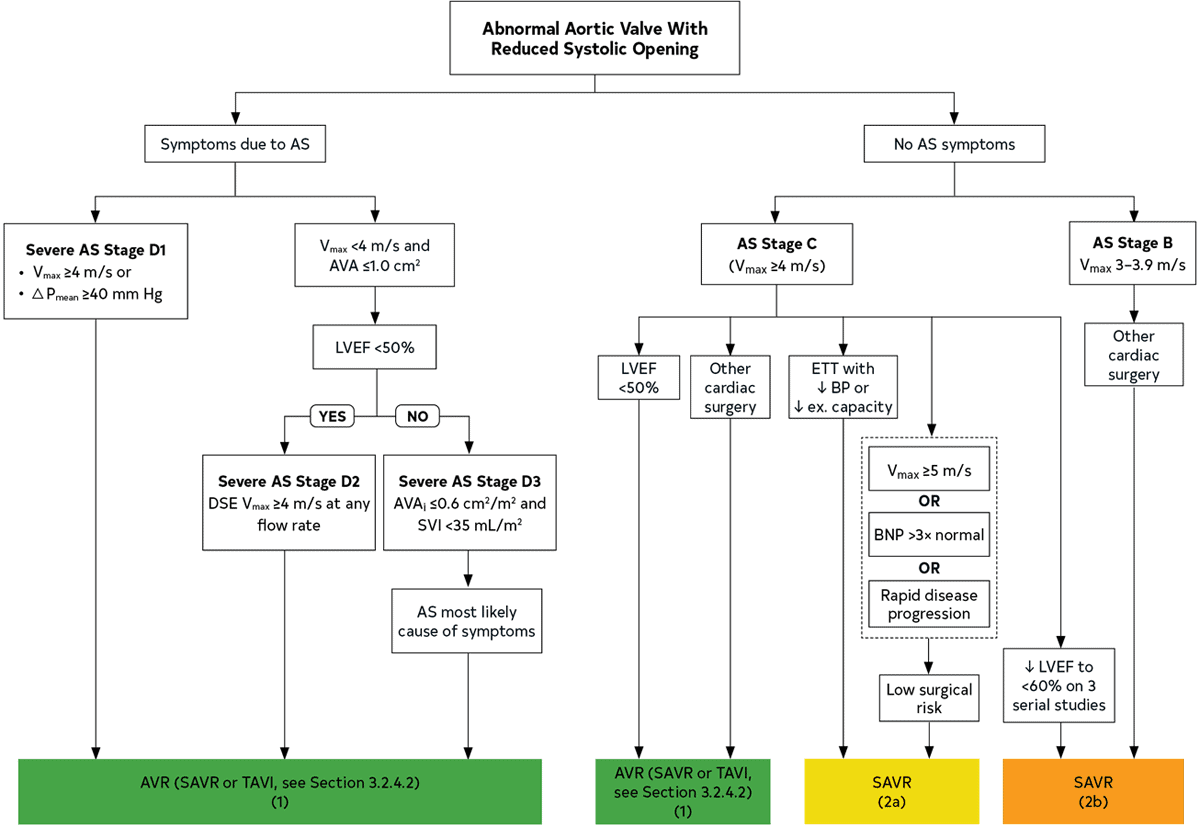
AHA 2020 - Timing of intervention for AS
Percutaneous Aortic Balloon Dilation
Mainly used in young patients; limited role in elderly
Can be used in patients with severe AS and refractory pulmonary edema or cardiogenic shock as a bridge but less common with availability of TAVI
Prosthetic Valve Choice
Choice of AVR should be based on shared decision making involving the Valve Team and the patient
Assess Risk and Frailty
Use either STS score or EUROSCORE II to assess risk (note – maybe we could include images of these scores as quick references too? Just a thought)
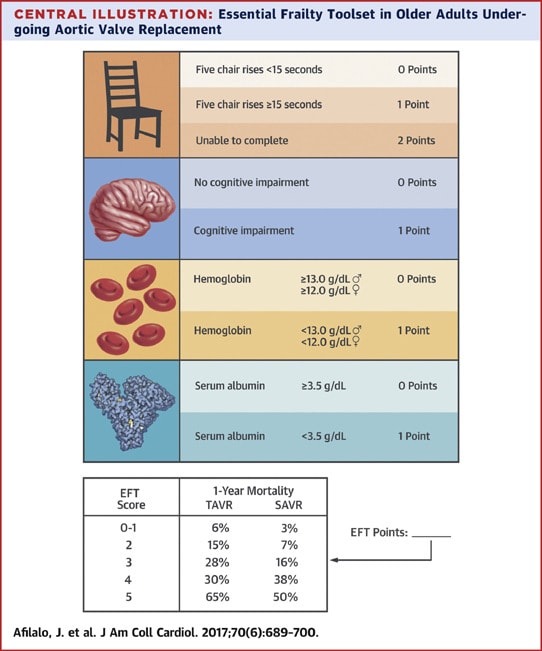
Use ADLs or frailty scores such as the FRAILTY-AVR 4 point score to assess frailty
Afilalo 2017 - FRAILTY-AVR 4 point score
High or prohibitive risk patients should go for TAVI or palliation
Not high risk:
<50 SAVR (mechanical valve)
unless contraindication to VKA
50-65 SAVR
Mechanical or bioprosthetic valve
Highly debated as new bioprosthetic valve more durable
65-80 SAVR or TAVI
>80 TAVI (Class 2 SAVR)
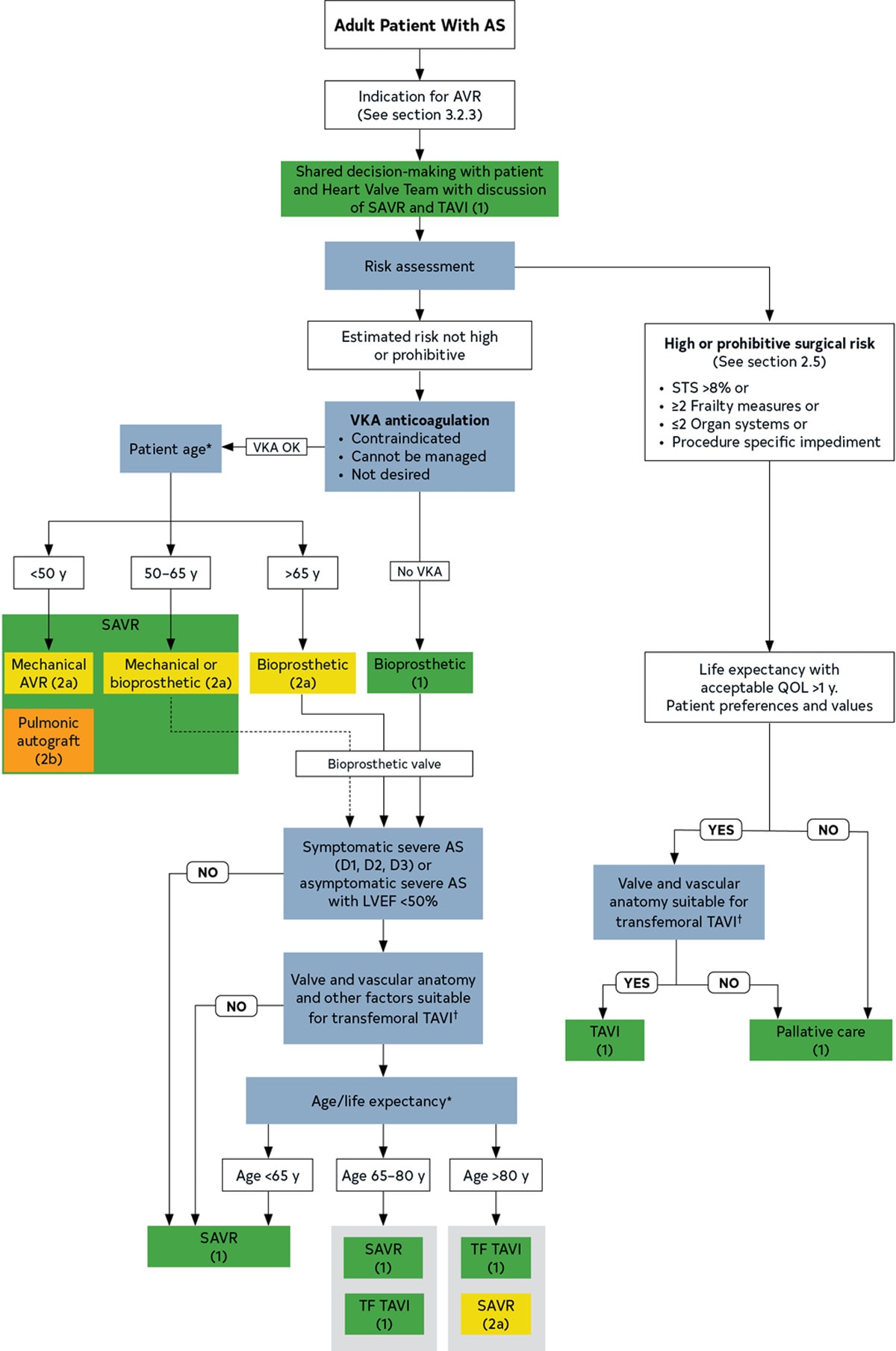
AHA 2020 - Choice of SAVR versus TAVI when AVR is indicated for valvular AS
Assess TAVI Suitability
TAVI suitability should be assessed by Valve Team
Assessment includes valve anatomy, annular size, coronary ostial height (low ostial height precludes TAVI) and vascular access
Decision Making Frameworks
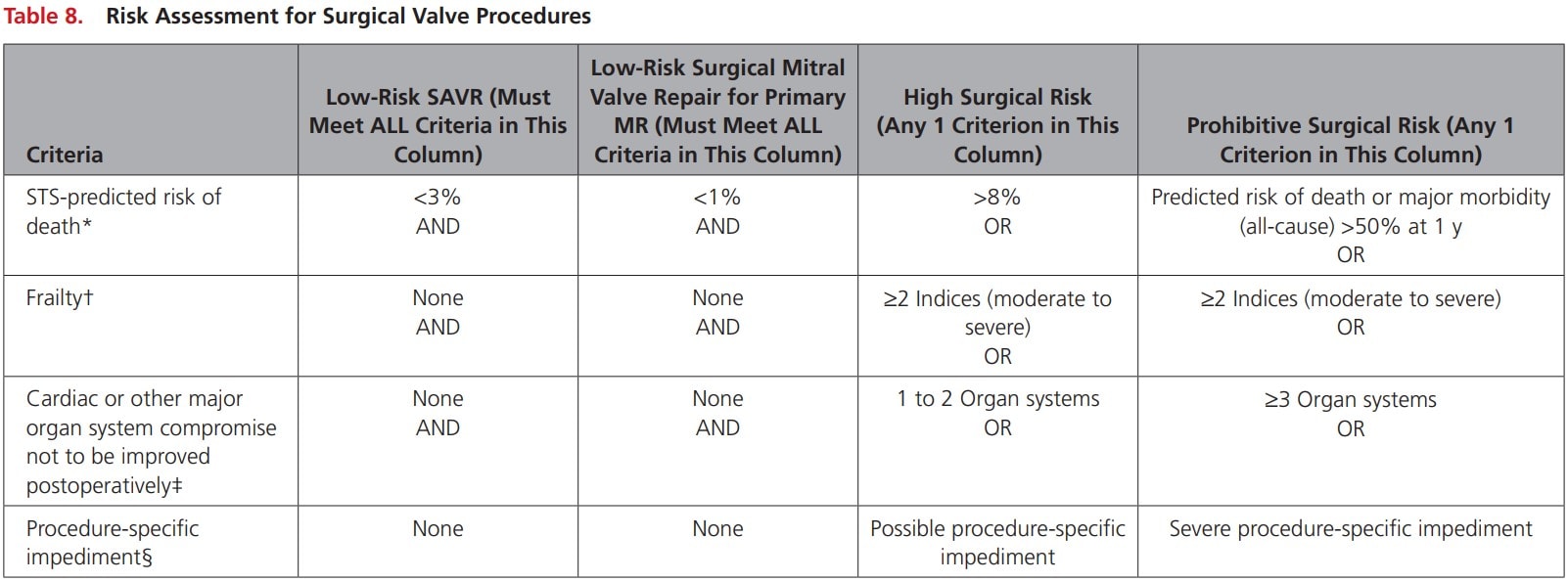
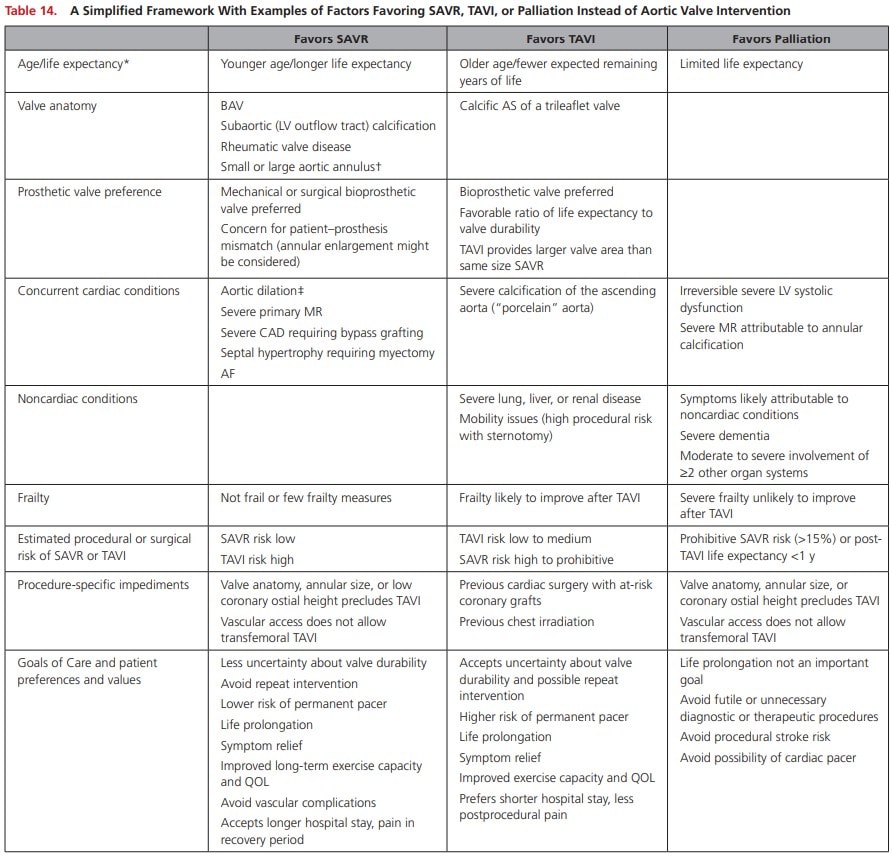
AHA 2020 - Risk Assessment for Surgical Valve ProceduresAHA 2020 - A Simplified Framework With Examples of Factors Favoring SAVR, TAVI, or Palliation Instead of Aortic Valve Intervention
Further Reading
2020 AHA: Guideline for the Management of Patients With Valvular Heart Disease (html) (pdf)
Afilalo J, Lauck S, Kim DH, et al. Frailty in Older Adults Undergoing Aortic Valve Replacement: The FRAILTY-AVR Study. J Am Coll Cardiol. 2017; 70(6):689-700. (html)